Monday, December 14, 2009

Homeopathy Explained

Click here to find out more!
Dana Ullman

Dana Ullman

Posted: December 12, 2009 09:30 AM

How Homeopathic Medicines Work: Nanopharmacology At Its Best


It is commonly assumed that homeopathic medicines are composed of extremely small doses of medicinal substances. And yet, does anyone refer to an atomic bomb as an extremely small dose of a bomb? In actual fact, there is a power, a very real power, in having atoms smash against each other.
Homeopathic medicines are made through a specific pharmacological process of dilution and vigorous shaking. However, when skeptics say that there is nothing but water in homeopathic medicine, they are proving their ignorance, despite the incredible arrogance in which they make these assertions. Dr. Martin Chaplin, a respected British professor who is one of the world's experts on water, has verified that "homeopathic water" and "regular water" are not the same, and his review of almost 2,000 references to the scientific literature on water (!) confirm this fact (Chaplin, 2009).
It should be noted that a large number of homeopathic medicines sold in health food stores and pharmacies are made in doses with known physiological doses. In fact, there are several thousand (!) studies in conventional scientific journals showing a wide variety of biological effects from extremely small doses of various substances on specific systems.
Homeopathic medicines can and should be considered to be a type of "nanopharmacology" (Ullman, 2006). Although the word "nano" also means one-billionth of a size, that is not its only definition. In fact, "nano" derives from the word "dwarf," and "nano" is the only word in the English language that is used on common parlance as denoting extremely small AND yet extremely powerful. Homeopathic medicines are both extremely small in dose and yet extremely powerful in their therapeutic effect.
For 200 years now, millions of physicians and hundreds of millions of homeopathic patients have observed and experienced the power and effectiveness of homeopathic medicines

The Power of Nano-doses
Precisely how homeopathic medicines work remains a mystery, and yet, nature is replete with mysteries and with numerous striking examples of the power of extremely small doses.
For instance, it is commonly known that a certain species of moth can smell pheromones of its own species up to two miles away. It is no simple coincidence that species only sense pheromones from those in the same species who emit them (akin to the homeopathic principle of similars), as though they have developed exquisite and specific receptor sites for what they need to propagate their species. Likewise, sharks are known to sense blood in the water at distances, and when one considers the volume of water in the ocean, it becomes obvious that sharks, like all living creatures, develop extreme hypersensitivity for whatever will help ensure their survival.
That living organisms have some truly remarkable sensitivities is no controversy. The challenging question that remains is: How does the medicine become imprinted into the water and how does the homeopathic process of dilution with succussion increase the medicine's power? Although we do not know precisely the answer to this question, some new research may help point the way.
The newest and most intriguing way to explain how homeopathic medicines may work derives from some sophisticated modern technology. Scientists at several universities and hospitals in France and Belgium have discovered that the vigorous shaking of the water in glass bottles causes extremely small amounts of silica fragments or chips to fall into the water (Demangeat, et al., 2004). Perhaps these silica chips may help to store the information in the water, with each medicine that is initially placed in the water creating its own pharmacological effect. In any case, each medicinal substance will interact with the silica fragments in its own idiosyncratic way, thereby changing the nature and structure of water accordingly.
Further, the micro-bubbles and the nano-bubbles that are caused by the shaking may burst and thereby produce microenvironments of higher temperature and pressure. Several studies by chemists and physicists have revealed increased release of heat from water in which homeopathic medicines are prepared, even when the repeated process of dilutions should suggest that there are no molecules remaining of the original medicinal substance (Elia and Niccoli, 1999; Elia, et al., 2004; Rey, 2003).

Also, a group of highly respected scientists have confirmed that the vigorous shaking involved with making homeopathic medicines changes the pressure in the water, akin to water being at 10,000 feet in altitude (Roy, et al., 2005). These scientists have shown how the homeopathic process of using double-distilled water and then diluting and shaking the medicine in a sequential fashion changes the structure of water.
One metaphor that may help us understand how and why extremely small doses of medicinal agents may work derives from present knowledge of modern submarine radio communications. Normal radio waves simply do not penetrate water, so submarines must use an extremely low-frequency radio wave. The radio waves used by submarines to penetrate water are so low that a single wavelength is typically several miles long!
If one considers that the human body is 70-80 percent water, perhaps the best way to provide pharmacological information to the body and into intercellular fluids is with nanodoses. Like the extremely low-frequency radio waves, it may be necessary to use extremely low (and activated) doses for a person to receive the medicinal effect.
It is important to understand that nanopharmacological doses will not have any effect unless the person is hypersensitive to the specific medicinal substance. Hypersensitivity is created when there is some type of resonance between the medicine and the person. Because the system of homeopathy bases its selection of the medicine on its ability to cause in overdose the similar symptoms that the sick person is experiencing, homeopathy's principle of similars is simply a practical method of finding the substance to which a person is hypersensitive.
The homeopathic principle of similars makes further sense when one considers that modern physiologists and pathologists recognize that disease is not simply the result of breakdown or surrender of the body but that symptoms are instead representative of the body's efforts to fight infection or adapt to stress.
Using a nanodose that is able to penetrate deeply into the body and that is specifically chosen for its ability to mimic the symptoms helps to initiate a profound healing process. It is also important to highlight the fact that a homeopathic medicine is not simply chosen for its ability to cause a similar disease but for its ability to cause a similar syndrome of symptoms of disease, of which the specific localized disease is a part. By understanding that the human body is a complex organism that creates a wide variety of physical and psychological symptoms, homeopaths acknowledge biological complexity and have a system of treatment to address it effectively.
Although no one knows precisely how homeopathic medicines initiate the healing process, we have more than 200 years of evidence from hundreds of thousands of clinicians and tens of millions of patients that these medicines have powerful effects. One cannot help but anticipate the veritable treasure trove of knowledge that further research in homeopathy and nanopharmacology will bring.

Nobel Prize-winning Scientist on Homeopathy...
Brian Josephson, Ph.D., (1940-) is a British physicist who won a Nobel Prize in Physics in 1973 for work he completed when he was only 22 years old. He is currently a professor at the University of Cambridge where he is the head of the mind-matter unification project in the Theory of Condensed Matter research group.
Responding to an article in the New Scientist (October 18, 1997) that expressed skepticism about homeopathy, Josephson wrote:

Regarding your comments on claims made for homeopathy: criticisms centered around the vanishingly small number of solute molecules present in a solution after it has been repeatedly diluted are beside the point, since advocates of homeopathic remedies attribute their effects not to molecules present in the water, but to modifications of the water's structure. Simple-minded analysis may suggest that water, being a fluid, cannot have a structure of the kind that such a picture would demand. But cases such as that of liquid crystals, which while flowing like an ordinary fluid can maintain an ordered structure over macroscopic distances, show the limitations of such ways of thinking. There have not, to the best of my knowledge, been any refutations of homeopathy that remain valid after this particular point is taken into account.
A related topic is the phenomenon, claimed by Jacques Benveniste's colleague Yolène Thomas and by others to be well established experimentally, known as "memory of water". If valid, this would be of greater significance than homeopathy itself, and it attests to the limited vision of the modern scientific community that, far from hastening to test such claims, the only response has been to dismiss them out of hand. (Josephson, 1997)
Later, when Josephson was interviewed by the New Scientist (December 9, 2006), he chose to emphasize that many scientists today suffer from "pathological disbelief"; that is, they maintain an unscientific attitude that is embodied by the statement "even if it were true I wouldn't believe it." Sadly, such scientists are simply showing evidence of an unscientific attitude.
Quantum Medicine
Quantum physics does not disprove Newtonian physics; quantum physics simply extends our understanding of extremely small and extremely large systems. Likewise, homeopathy does not disprove conventional pharmacology; instead, it extends our understanding of extremely small doses of medicinal agents. It is time that physicians and scientists began incorporating both Newtonian and quantum physics into a better understanding of what healing is and how to best augment it.
The founder of homeopathic medicine, Samuel Hahnemann, MD, rewrote and updated his seminal work on the subject five times in his lifetime, each time refining his observations. Homeopaths continue to refine this system of nanopharmacology. While there is not always agreement on the best ways to select the correct remedy or the best nanopharmacological dose to use, the system of homeopathic medicine provides a solid foundation from which clinicians and researchers exploring nanopharmacologies can and should explore.
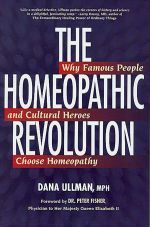

Dana Ullman, MPH, is America's leading spokesperson for homeopathy and is the founder of www.homeopathic.com. He is the author of 10 books, including his bestseller, Everybody's Guide to Homeopathic Medicines. His most recent book is, The Homeopathic Revolution: Why Famous People and Cultural Heroes Choose Homeopathy. Dana lives, practices, and writes from Berkeley, California.
References:
Chaplin, Martin. 2009 (updated regularly) http://www1.lsbu.ac.uk/water/index2.html
Demangeat, J.-L., Gries, P., Poitevin, B., Droesbeke J.-J., Zahaf, T., Maton, F., Pierart, C., and Muller, R. N. Low-Field NMR Water Proton Longitudinal Relaxation in Ultrahighly Diluted Aqueous Solutions of Silica-Lactose Prepared in Glass Material for Pharmaceutical Use, Applied Magnetic Resonance, 2004, 26:465-481.
Elia, V. and Niccoli, M. Thermodynamics of Extremely Diluted Aqueous Solutions, Annals of the New York Academy of Sciences, 1999, 879:241-248.
Elia, V., Baiano, S., Duro, I., Napoli, E., Niccoli, M., and Nonatelli, L. Permanent Physio-chemical Properties of Extremely Diluted Aqueous Solutions of Homeopathic Medicines, Homeopathy, 2004, 93:144-150.
Josephson, B. D., Letter, New Scientist, November 1, 1997.
Rey, L. Thermoluminescence of Ultra-High Dilutions of Lithium Chloride and Sodium Chloride. Physica A, 2003, 323:67-74.
Roy, R., Tiller, W. A., Bell, I., and Hoover, M. R. The Structure of Liquid Water: Novel Insights from Materials Research; Potential Relevance to Homeopathy, Materials Research Innovations, December 2005, 9(4):577-608..
Ullman, Dana. "Let's have a serious discussion of nanopharmacology and homeopathy". FASEB. 2006;20:2661.

Sunday, December 13, 2009

A Flaw in the Ointment. Medicare Buy-In a Bust


CONTACT: Physicians for a National Health Program
Steffie Woolhandler, M.D., M.P.H.
Mark Almberg, Physicians for a National Health Program, (312) 782-6006, mark@pnhp.org

‘Medicare Buy-In’ Is Really a Subsidy to Private Insurers: Harvard Professor

WASHINGTON - December 11 - The Senate proposal to allow uninsured people over age 55 an opportunity to buy into Medicare constitutes yet another government subsidy to the private health insurance industry, a leading health policy analyst and single-payer advocate says.
Dr. Steffie Woolhandler, co-founder of Physicians for a National Health Program and professor of medicine at Harvard Medical School, told a radio host Wednesday morning, “One of the better provisions of the reform legislation was that it prohibited charging older people more than twice (or thrice in the some versions) as much as you charge younger people in the individual market. But by saying everyone over 55 in the individual market can be picked up by Medicare, you’ve really let the insurance industry off the hook.”
Woolhandler continued: “That is, the highest-cost patients in the individual market will be taken off their hands and paid for by the taxpayers; and private insurance will remain the only option for people under the age of 55 and for anyone who gets their insurance through their employer. Another way of saying that is: if you now have private health insurance and you don’t like it, you’re forced to keep it.
“The buy-in to Medicare is only for those 55 to 64 and it’s only for people who are not offered private health insurance through an employer. So it turns into just a subsidy to private health insurance: the taxpayers will pay for the high-cost patients and the health insurance industry can take the lower-cost patients.”
Woolhandler, who also practices primary care at Cambridge Hospital in Massachusetts, is a prominent advocate for single-payer national health insurance, sometimes called an expanded and improved Medicare for All. She says research has demonstrated that replacing today’s multi-payer system, with its wasteful paperwork and bureaucracy, with a streamlined single-payer system would save about $400 billion annually, enough to assure everyone comprehensive, quality care.
“I want to remind people that at its core, this bill takes $450 billion in new taxes from the taxpayers, and hands it over to the private health insurance as subsidies. So, the core of the bill is a financial strengthening of the private health insurance industry. Now, one of the small things that was good about the plan, that is, forcing the insurance industry to lower the prices for older enrollees, has been taken out of the bill, essentially.”
Woolhandler also said the proposal for an exchange of private, nonprofit insurance plans for those under 55 will be of little benefit, noting, “It’s similar to the menu that is offered to federal workers, but of course federal workers actually get money to buy the health insurance. They don’t just get the menu, they get the money.”
A full audio recording of the interview, conducted by an affiliate of KPFK Pacifica radio in Los Angeles, is available here.
Woolhandler is also co-author of several studies published in prominent medical journals this year, including one showing 62 percent of personal bankruptcies are linked to medical bills or illness and another showing that nearly 45,000 excess deaths annually are attributable to lack of health insurance.
Dr. Woolhandler and other leaders of Physicians for a National Health Program are available for interview on the most recent developments in the emerging health reform legislation.
###
Physicians for a National Health Program is a single issue organization advocating a universal, comprehensive single-payer national health program. PNHP has more than 15,000 members and chapters across the United States.

Friday, December 11, 2009

Voices of a Peoples's History of the United States

'Great Man' Theory? History Is Driven by the Little Guy

by Viggo Mortensen
Actors have the privilege of exploring fictional characters, to see the world from the perspective of another person's imagined life. Sometimes, usually less often, we have the opportunity to speak the words of historical figures, to say the words they themselves spoke. This presents a different kind of challenge, in many ways, something I have been thinking about personally since becoming involved with a performance project and now documentary film called The People Speak, which is airing on History Channel, Sunday, December 13, at 8 pm (7 pm Central). (A soundtrack of music from the film is available from the Verve label December 9.)
The project is inspired by Howard Zinn's books A People's History of the United States and, with Anthony Arnove, Voices of a People's History of the United States, two books that have had a deep influence on how I understand this country. Howard's books provide a history of the United States from below, from the standpoint of ordinary people often overlooked in our textbooks and in our culture.
In 2005, I had the chance to be part of reading in Los Angeles with a remarkable lineup of actors, including Sandra Oh and Josh Brolin, which we called Voices of a People's History of the United States. The enthusiastic reaction of the audience to hearing the words of people in our country's history who have spoken out, fought injustice, and made a change, demonstrated how empowering it can be for people to reclaim this history and to make it their own. And how enlightening it is to shine the light of history on the issues and concerns of the present.
The success of these performances throughout the country -- some in high schools and some in theaters, some with professional actors and musicians, some with high school students -- led a few of us to think that we should make a film that could highlight and preserve these stories. The stories of people like Plough Jogger, a farmer in Shay's Rebellion, who asserted "We've come to relieve the distresses of the people."
Or an anonymous member of the Industrial Workers of the World who was arrested for denouncing World War One, saying, "This war is a businessman's war and we don't see why we should go out and get shot in order to save the lovely state of affairs which we now enjoy."
Or Orlando and Phyllis Rodriguez, who lost their son on 9/11, and issued this heartfelt statement a few days after: "Our son died a victim of an inhuman ideology. Our actions should not serve the same purpose. Let us grieve. Let us reflect and pray. Let us think about a rational response that brings real peace and justice to our world. But let us not as a nation add to the inhumanity of our times."
What we have found in making this film over the past two years is that people respond to these voices is profoundly personal and emotional ways. They take inspiration from seeing how people struggled in the past, often against far greater odds than we face today, to make their voices heard and to right historic wrongs. They find insight from these expressions of the past into how they feel and live in the present. And they also find hope for a different future.
As Howard Zinn has often pointed out, history told from above -- from the standpoint of generals and kings and presidents -- encourages passivity, a sense of helplessness. In this version of history, "great men" make history, not ordinary people. But looked at from below, history has another lesson. Whenever change as happened, it has been through protest, dissent, struggle, social movements, ordinary people picketing, striking, boycotting, sitting down, sitting in. All this mans that we make history, history is effected by our everyday decisions. And we have a responsibility to speak out when we see injustice. We can't wait on others to "lead" us or solve our problems for us. We have to participate, to engage, every day and not just once every four years.
Howard Zinn's work also reminds us that we always need to ask: what stories am I not hearing? Whose voices am I not hearing? And that if no one is telling our stories, we need to find ways -- creative, dynamic -- ways of telling them ourselves.
Viggo Mortensen in an acclaimed actor who will appear in John Hillcoat's The Road, the highly anticipated film adaptation of Cormac McCarthy's best selling novel.

Wednesday, December 9, 2009

Costs of Nuclear Power Prohibitive

Published on Wednesday, December 9, 2009 by The Herald News (Mass.)

Nuclear Power: Too Expensive, Too Risky

by John LaForge
Lofty claims about the benefits of nuclear power are coming from the Nuclear Energy Institute and others.

Meanwhile, news, financial and energy journals make clear that boiling water with uranium is the costliest and dirtiest energy choice. Even Time magazine reported Dec. 31, 2008, “It turns out that new (reactors) would be not just extremely expensive but spectacularly expensive.”

Florida Power and Light’s recent estimate for a 2-reactor system is a shocking $12 to $18 billion. The Wall St. Journal reported on nuclear’s prospects May 12, 2008 finding, “[T]he projected cost is causing some sticker shock ... double to quadruple earlier rough estimates. These estimates never include the costs of moving and managing radioactive waste — a bill that keeps coming for centuries.

Radioactive tritium has poisoned groundwater near at least 14 U.S. reactors, including Kewaunee in Wisconsin. Water under Braidwood, Dresden, Brookhaven, Palo Verde, Indian Point, Diablo Canyon, San Onofre and Kewaunee is all contaminated at levels above EPA and NRC standards.

Nuclear power is so clean that Germany legislated a phase-out of its 17 reactors by 2025. Germany’s 1998 decision was based partly on government studies that found high rates of childhood leukemia in areas near its reactors. In July 2007, the European Journal of Cancer Care published a similar report by Dr. Peter Baker of the Medical Univ. of South Carolina that found elevated leukemia incidence in children near U.S. reactors.

U.S. Rep. Ed Markey, D-Mass., attacked the Nuclear Regulatory Commission in 2005, writing “The nuclear industry and the NRC have automatically dismissed all studies that link increased cancer risk to exposure to low levels of radiation. The NRC needs to study — not summarily dismiss — the connection between serious health risks and radiation released from nuclear reactors.”

The New York Times reported five years ago that owners of nearly half the reactors in the U.S. “are not reserving enough money to decommission them on retirement, according to Congressional auditors, who also say the NRC is not tracking the money carefully.”

In its July 2007 study “Too Hot to Handle,” the Oxford Research Group calls the hope of quickly building new reactors a “pipe dream.” Dr. Arjun Makhijani, the president of the Institute for Energy & Environmental Research, says in his book, Carbon-Free and Nuclear-Free: A Roadmap for U.S. Energy Policy, “Even the leaders of the nuclear industry have said that they will not build new plants without 100 percent federal loan guarantees.”

In his 2008 report “The Flawed Economics of Nuclear Power,” Lester Brown, president of the Earth Policy Institute, concludes, “While little private capital is going into nuclear power, investors are pouring tens of billions of dollars into wind farms each year.

And while the world’s nuclear generating capacity is estimated to expand by only 1,000 megawatts this year, wind generating capacity will likely grow by 30,000 megawatts.”

The Washington Post reported Nov. 24 that “leading environmental figures, including former Vice President Al Gore, remain skeptical of nuclear’s promise,” because of the high cost of building and the threat of nuclear weapons proliferation. Indeed, but leading security and big business figures are skeptical for the same reasons.

The federal Commission on the Prevention of Weapons of Mass Destruction Proliferation and Terrorism has called for halting subsidies that promote nuclear power’s expansion.

In the commission’s Oct. 21 report “The Clock Is Ticking,” recommendation No. 3 is, “The U.S. should work internationally toward strengthening the non-proliferation regime ... discouraging, to the extent possible, the use of financial incentives in the promotion of civil nuclear power.”
And no less than Jeffrey Immelt, current CEO of General Electric — one of the world’s richest nuclear engineering firms — discourages new reactor construction because of financial liabilities.

In the Nov. 18, 2007 London Financial Times, he says, “If you were a utility CEO and looked at your world today, you would just do gas and wind. You would say (they are) easier to site, digestible today and I don’t have to bet my company on any of this stuff. You would never do nuclear. The economics are overwhelming.”

The plague of radiation-induced illness is overwhelming too. Let’s re-write the milk add: Got cancer?
John LaForge is on the Nukewatch staff and edits its quarterly.